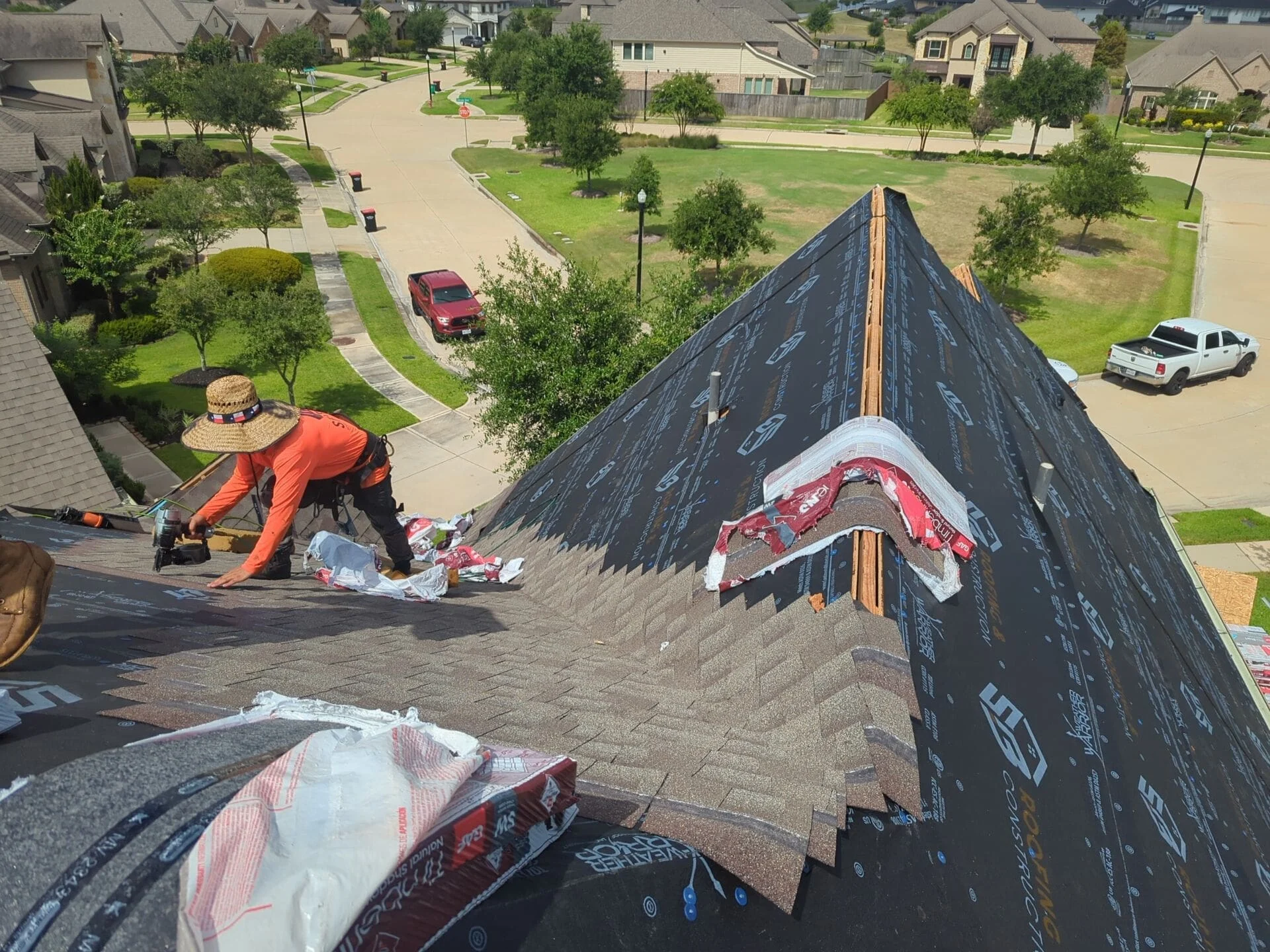
Following a severe Texas hailstorm, most homeowners step outside and glance up at their roof. If no shingles are missing and no water is dripping into the living room, they assume everything is fine. Unfortunately, that assumption costs Houston property owners thousands in delayed water damage repairs.
1. Granule Loss and Bald Shingle Spots
Mineral granules coat asphalt shingles to reflect UV radiation and protect the underlying asphalt core. When hail impacts a shingle, it knocks granules loose. Over several weeks of intense Texas sunshine, exposed asphalt dries out, becomes brittle, and cracks. Check your gutter downspouts. If you see excessive dark sand-like granules, your shingles took a severe beating.
2. Bruised Shingles (Sub-Surface Fractures)
Hail does not always punch a clean hole through a shingle. Instead, it creates a "bruise" where the fiberglass mat underneath tears while the top layer remains superficially intact. Pressing gently on a bruised spot reveals a soft, spongy texture indicating the waterproof barrier has failed.
Need an unbiased roof audit?
SB Restorations provides 100% free high-resolution drone and physical roof inspections with zero sales pressure.
3. Soft Metal Indentations on Vents and Flashing
The easiest place to spot hail impact is on the soft aluminum components of your roofing system: ridge vents, turtle vents, exhaust caps, and gutter troughs. If metal vents show circular dings, your shingles sustained identical impacts.
4. Loosened or Lifted Sealant Strips
High-velocity storm winds create uplift pressure that breaks the adhesive thermal seal gluing shingle courses together. Even if the shingle stays in place, wind-driven rain can now blow under the tabs and soak the decking.
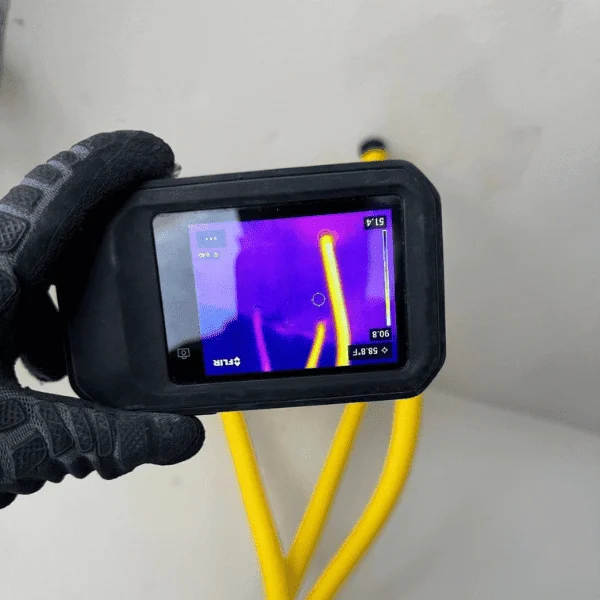
5. Discoloration or Moisture in the Attic
A quick inspection of your attic crawlspace can uncover slow leaks before they stain ceiling drywall. Look for rust on roof nails, dark moisture stains along plywood seams, or compressed damp fiberglass insulation batts.